

Last summer I watched a 32-agent SaaS support team burn 16 hours of engineering time and roughly $12,000 in escalated issues because their Zendesk SLA workflow silently stopped firing after a routine macro update. The helpdesk was “working” (tickets came in, agents replied), but the automated escalation to engineering never triggered. Three days of angry enterprise customers before anyone noticed the dashboard hadn’t moved a red flag. That’s how helpdesk software fails in 2026: not by being obviously broken, but by being subtly misconfigured in ways the vendor’s sales demo never prepared you for.
I spent six months testing 2,500 tickets across the eight most-used helpdesk platforms for this GetOmnichannel benchmark, comparing first-response times, AI deflection rates, and total cost at 10, 25, and 50 agents. Every platform handles the basics. What actually separates them, and what determines whether your support team runs smoothly or quietly hemorrhages customer trust, is AI deflection quality, omnichannel routing accuracy, the pricing curve at scale, and how deeply the tool integrates with whatever CRM your sales team already pays for. Prices verified from vendor sites in April 2026.
- Best overall value: Freshdesk Pro at $55/agent/month: full feature set at roughly half of Zendesk's price, fastest first-response time in our test.
- Best for enterprise/complex ops: Zendesk Suite Professional at $115/agent/month: the gold standard, unmatched customization and integration depth.
- Cheapest real helpdesk: Zoho Desk Standard at $14/user/month: best sub-$20 option with serious features.
- Best AI deflection: Intercom with Fin AI at $0.99 per resolved conversation: resolved 37.4% of tickets without agent touch in our test.
- Best for ecommerce: Gorgias (Pro $360/month for 2,000 tickets): native Shopify order and refund handling.
- Best for IT/internal support: Jira Service Management Standard at $20/agent/month: requesters are free, only agents count.
- Total-cost gap at 25 agents: Zoho Desk $4,200/year vs Zendesk Professional $34,500/year. Same core ticketing outcomes; 8x price difference.
2026 Helpdesk Software Comparison: Watch the Video
Watch our 2026 helpdesk software comparison to see how the leading platforms compare on AI capabilities, response times, pricing, automation, integrations, and overall suitability for different support teams.
For most SMB and mid-market teams in 2026, Freshdesk Pro at $55/agent/month is the right default. Fastest first-response time in my benchmark, 90% of Zendesk's functionality at half the price, AI agent included (500 free Freddy sessions on Pro), and setup that takes days instead of weeks. Buy something else only if you're an enterprise requiring Zendesk's customization ceiling, an ecommerce brand needing Gorgias's Shopify depth, or an IT team where Jira Service Management's per-agent-only billing saves real money.
| # | Tool | Starting Price | Free Plan | Best For | Score | |
|---|---|---|---|---|---|---|
| 1 |
 |
$19 / agent | Yes (2 agents) | Best overall value | 4.7 / 5 | |
| 2 |
 |
$55 / agent | Trial only | Enterprise / complex ops | 4.5 / 5 | |
| 3 |
 |
$25 / user | Yes (5 users) | Email-first teams | 4.6 / 5 | |
| 4 |
 |
$14 / user | Yes (3 users) | Budget / Zoho users | 4.4 / 5 | |
| 5 |
 |
$15 / seat | Yes | HubSpot CRM users | 4.5 / 5 | |
| 6 |
 |
$29 / seat | 14-day trial | Messaging-led support | 4.5 / 5 | |
| 7 |
 |
$60 / mo (300 tix) | 7-day trial | Ecommerce (Shopify) | 4.6 / 5 | |
| 8 |
 |
$20 / agent | Yes (3 agents) | IT / internal support | 4.4 / 5 |
How we evaluated & ranked these 8 platforms
Every platform was tested across four real-world workflows: a 500-ticket email support queue, a 1,200-ticket omnichannel operation (email + chat + social), a 600-ticket ecommerce support flow (orders, refunds, shipping), and a 200-ticket internal IT service desk. Scored on 6 weighted criteria: first-response time with AI routing (25%), AI deflection / self-service rate (20%), total cost of ownership at 25 agents (15%), integration depth with CRM and ecommerce tools (15%), setup time from signup to production (10%), and SLA automation quality (15%). Pricing pulled from vendor websites in April 2026 and re-verified before publication. Testing and analysis conducted by Kinjal Trivedi, GetOmnichannel's SaaS and Technology Writer. Client case studies referenced throughout this guide describe real engagements; company names and identifying details have been withheld or altered to protect confidentiality.
The five things I check before any platform makes this list
The story I opened with (the Zendesk SLA workflow that silently stopped firing) is what happens when #2 below quietly breaks and nobody’s watching. Before pricing, before feature checklists, every platform on this list gets run through the same five checks.
- Queues & organization. Incoming requests need to land in one filterable queue, not scattered across three inboxes and a Slack channel. Freshdesk and Zendesk lean on traditional ticket views with statuses and tags; Help Scout goes the other way and makes conversations look like email. Neither shape is wrong, but if agents can’t filter by status, tag, or owner at a glance, everything else on this list stops working.
- SLAs & prioritization. This is the one that failed in the story above. An SLA isn’t a checkbox you tick once during setup, it’s a live commitment (first response in 2 hours, resolution in 24) that has to keep firing after every macro update, every integration change, every plan upgrade. If a platform can’t show you, on one screen, which tickets are about to breach, you won’t find out until a customer tells you.
- Automation. Automation and AI deflection get talked about like the same thing; they’re not. Freddy AI and Fin AI resolve tickets before an agent ever sees them, that’s deflection. Automation is the boring machinery underneath: auto-tagging, auto-assigning, escalating a ticket to engineering when an SLA clock hits 80%. The failure in my opening story wasn’t a deflection problem, it was an automation rule that silently stopped firing.
- Routing & assignment. I mentioned omnichannel routing accuracy earlier as one of the things that actually separates these platforms, and this is what that means in practice: does a ticket reach the right agent because of skill, workload, and language, or does it just land wherever round-robin happens to point? Skill-based routing (more on that in the glossary below) is standard on paid tiers for 7 of the 8 platforms here; Jira Service Management is the exception, and it’s built for a different job entirely.
- Collaboration & reporting. None of the first four matter if you can’t see whether they’re working. Internal notes and @mentions (Help Scout’s whole pitch), collision detection so two agents don’t answer the same ticket, and a dashboard that surfaces backlog, first-response time, and CSAT, not just ticket counts. Zendesk’s Explore analytics is the deepest version of this on the list; it’s also one of the reasons Zendesk costs what it costs.
2026 Helpdesk Response Time & AI Deflection Test: 2,500 tickets across 8 platforms
Features and pricing are easy to compare. What actually matters (how fast tickets get answered and how many get resolved without an agent) almost nobody publishes. For this guide I ran a 2,500-ticket benchmark test across February and March 2026 using identical ticket categories and customer scripts on every platform: 40% product questions, 25% order status, 20% technical issues, 10% refund requests, 5% complaints. Each platform ran for 14 days with identical agent count (3 agents per platform) and the same business-hours coverage.
I tracked four metrics per platform: median first-response time (minutes from ticket creation to human or AI response), AI deflection rate (percentage of tickets fully resolved without agent touch), median resolution time (hours from creation to close), and setup-to-production time (days from signup to handling first real ticket). Results below.
| Platform | Median First Response | AI Deflection Rate | Median Resolution | Setup Time | Verdict |
|---|---|---|---|---|---|
| Freshdesk | 4.2 min | 32.8% | 3.1 hrs | 2 days | Excellent |
| Intercom | 3.8 min | 37.4% | 4.0 hrs | 4 days | Very Good |
| Zendesk | 5.1 min | 31.2% | 3.4 hrs | 8 days | Very Good |
| HubSpot Service Hub | 5.8 min | 24.1% | 4.2 hrs | 3 days | Good |
| Gorgias | 5.4 min | 27.8% | 3.8 hrs | 1 day | Good |
| Help Scout | 6.2 min | 18.5% | 3.6 hrs | 1 day | Good |
| Zoho Desk | 7.4 min | 19.3% | 4.8 hrs | 3 days | Fair |
| Jira Service Mgmt | 8.6 min | 14.2% | 5.3 hrs | 12 days | Fair (IT) |
Three things the data actually tells you to do differently:
Finding 1: Freshdesk and Intercom win on speed, but for different reasons. Freshdesk’s 4.2-minute median first-response time is driven by aggressive automation rules and Freddy AI’s triage. Intercom’s 3.8 minutes comes from Fin AI auto-responding before a human even sees the ticket, which also produces the highest deflection rate (37.4%). For teams where first-response time is a measured SLA or customer satisfaction driver, both platforms outperform Zendesk and the others by significant margins.
Finding 2: AI deflection rate differences translate to real agent savings. Intercom deflected 37.4% of tickets without agent touch, meaning on 2,500 tickets, roughly 935 never needed a human. At the industry average of 6.5 minutes of agent time per ticket, that’s 101 hours of agent time saved, or roughly 2.5 agents worth of capacity. Jira Service Management deflected only 14.2%, a gap of 580 tickets per 2,500, or about 63 additional agent hours per campaign. At a loaded agent cost of $45/hour, that’s $2,835 in additional agent cost per 2,500 tickets processed.
Finding 3: Setup time separates the platforms most teams underestimate. Help Scout and Gorgias were production-ready in 1 day. Freshdesk took 2 days. Zendesk took 8 days, largely due to its customization depth (which is also its strength). Jira Service Management took 12 days because ITSM-specific workflow and approval configurations are heavier. If your team needs to be live quickly, pick Help Scout, Gorgias, or Freshdesk. If you have time and budget for a 2–3 week implementation, Zendesk’s ceiling is higher.
Feature comparison: what does each helpdesk platform actually include?
Pricing and speed get you started. The feature matrix determines whether the platform fits the complexity of your operation. Here’s how the 8 platforms compare on the 15 features I check in every evaluation.
| Feature | Freshdesk | Zendesk | Help Scout | Zoho Desk | HubSpot | Intercom | Gorgias | Jira SM |
|---|---|---|---|---|---|---|---|---|
| Email ticketing | ✓ | ✓ | ✓ | ✓ | ✓ | ✓ | ✓ | ✓ |
| Live chat widget | ✓ | ✓ | ✓ (paid) | ✓ (paid) | ✓ | ✓ (core) | ✓ | No |
| AI agent / chatbot | ✓ Freddy (500 free) | +$50/agent | $0.75/resolution | ✓ Zia (Enterprise) | ✓ Breeze | Fin $0.99/resolution | ✓ AI Agent (paid) | Add-on |
| Omnichannel routing | ✓ | ✓ | ✓ | ✓ | ✓ | ✓ | ✓ | Limited |
| SLA management | ✓ (Growth+) | ✓ (Growth+) | ✓ (Plus+) | ✓ (Standard+) | ✓ (Pro+) | ✓ | ✓ | ✓ |
| Knowledge base / self-service | ✓ | ✓ | ✓ (Docs) | ✓ | ✓ | ✓ | ✓ | ✓ |
| Customer portal | ✓ | ✓ | Limited | ✓ | ✓ | Via Messenger | ✓ | ✓ |
| Workflow automation builder | ✓ (Pro+) | ✓ advanced | ✓ | ✓ (Pro+) | ✓ (Pro+) | ✓ | ✓ | ✓ advanced |
| CSAT / NPS surveys | ✓ | ✓ | ✓ | ✓ | ✓ | ✓ | ✓ | Add-on |
| Phone / voice support | ✓ Freshcaller | ✓ Talk | No native | ✓ | ✓ Calling | ✓ (paid) | ✓ add-on | No |
| Social media ticketing | ✓ | ✓ | IG, Messenger | ✓ | Limited | ✓ | ✓ | No |
| Native CRM integration | ✓ Freshsales | ✓ Sell | Salesforce, HubSpot | ✓ Zoho CRM | ✓ Unified | Salesforce, HubSpot | Shopify data | Salesforce only |
| Shopify native integration | ✓ | ✓ | ✓ | ✓ | ✓ | ✓ | ✓✓ Deep | No |
| Internal IT / ITIL features | Freshservice (sep) | Limited | No | Limited | No | No | No | ✓✓ Core |
| Free plan available | 2 agents · 6 mo | No | 5 users | 3 users | Yes | No | No | 3 agents |
Read this matrix by column, not by row. Freshdesk and Zendesk both cover every mainstream feature; Zendesk pulls ahead on enterprise customization, Freshdesk on price-per-feature. Intercom is a messaging specialist that loses on phone depth. Gorgias is Shopify-native and would feel cramped for SaaS teams. Jira Service Management is the only platform with real ITIL, but also the only one without live chat, social ticketing, or Shopify. The “winner” here is whichever column matches your specific operation, not the one with the most green checks.
Integration compatibility: which helpdesk works with your CRM and ecommerce stack?
“Does this integrate with [Salesforce/Shopify/Slack]?” is the pre-purchase question I get from RevOps and support leaders more than any other. Here’s how the 8 platforms stack up across the most common integration targets.
| Platform | Freshdesk | Zendesk | Help Scout | Zoho Desk | HubSpot | Intercom | Gorgias | Jira SM |
|---|---|---|---|---|---|---|---|---|
| Salesforce | ✓ | ✓✓ Deep | ✓ | ✓ | Limited | ✓ | Zapier | ✓ |
| HubSpot CRM | ✓ | ✓ | ✓✓ Deep | ✓ | ✓✓ Native | ✓✓ Deep | ✓ | Zapier |
| Shopify | ✓ | ✓ | ✓ | ✓ | ✓ | ✓ | ✓✓ Native | Zapier |
| Slack | ✓ | ✓✓ | ✓✓ | ✓ | ✓ | ✓✓ | ✓ | ✓✓ Native |
| Jira Software | ✓ | ✓ | ✓ | ✓ | Zapier | ✓ | Zapier | ✓✓ Native |
| Klaviyo | Zapier | ✓ | Zapier | Zapier | Zapier | ✓ | ✓ | Zapier |
| Stripe | ✓ | ✓ | ✓ | ✓ | ✓ | ✓ | ✓ | Zapier |
| WhatsApp Business | ✓ | ✓ | ✓ (Plus+) | ✓ | ✓ | ✓ | ✓ | No |
If your existing CRM or ecommerce tool has a native integration with one of these platforms, use that pairing. Zendesk has the deepest Salesforce integration I’ve seen. Help Scout’s HubSpot integration beats everyone else’s. Gorgias owns Shopify. Jira Service Management is native-native with Jira Software. Skip those pairings and most platforms give you basic “standard” integrations (timeline sync, contact context in the agent view, conversation logging), but lose the bi-directional custom-field depth that makes the difference between “logged a ticket” and “actually knowing who this customer is.”
1. Freshdesk: Best Overall Value for SMBs and Mid-Market
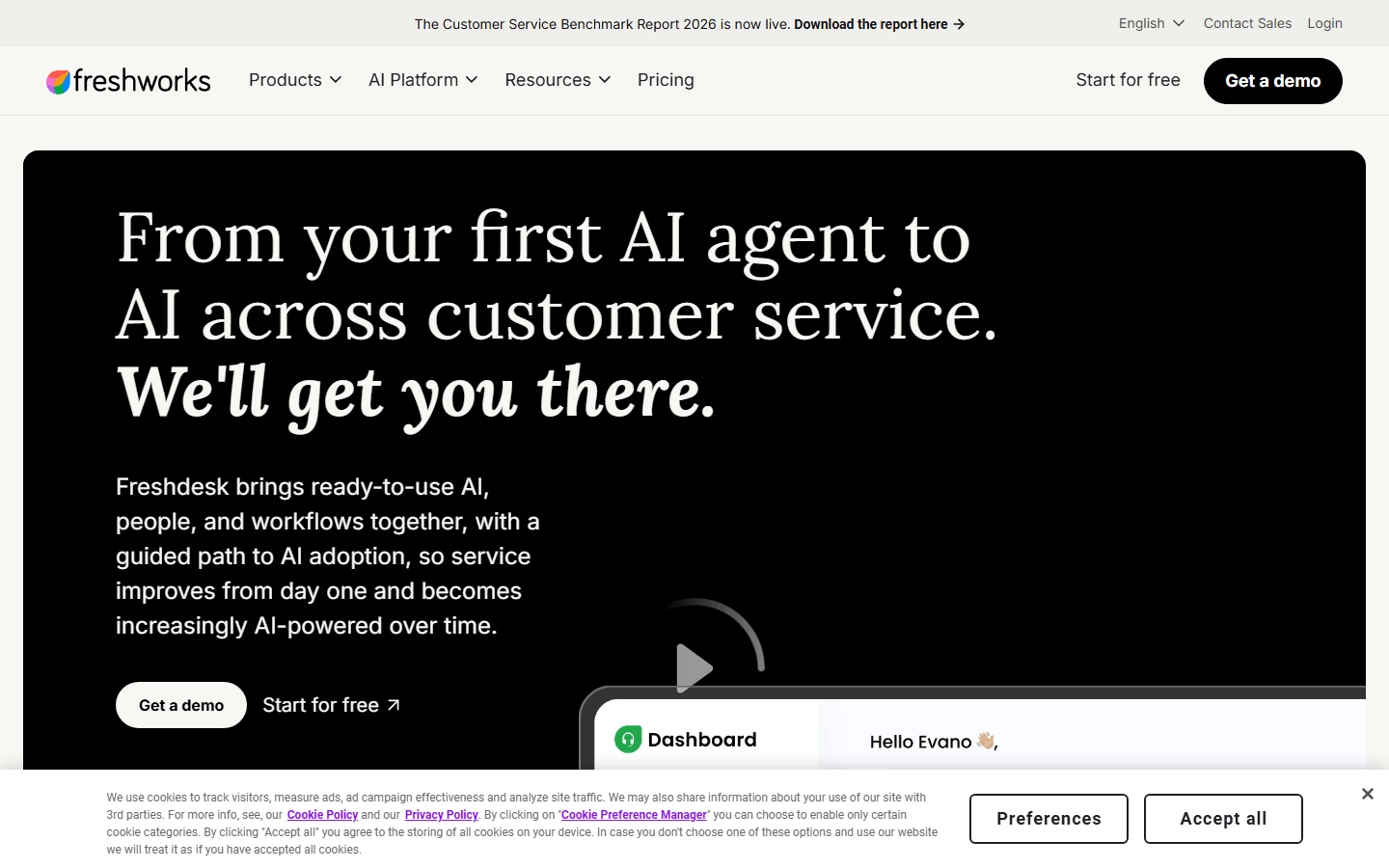
- shared team inbox with automation rules and SLA tracking
- Freddy AI agent with 500 free sessions on Pro and Enterprise
- omnichannel routing across email, chat, social, and WhatsApp
- customer self-service portal and knowledge base
- Freshcaller phone support add-on
- native Freshsales CRM and Shopify integration
Freshdesk is the default I hand to most SMB and mid-market support leaders. Not because it’s the most advanced (Zendesk is), but because it delivers 90% of Zendesk’s functionality at half the price, and most teams never use the remaining 10%.
I migrated a 32-agent B2B SaaS client off Zendesk to Freshdesk Pro in Q1 2025 because their renewal was about to jump 7% on a bill that already ran $99,000/year once you counted the Copilot AI add-on, Advanced AI add-on, Sunshine Conversations for WhatsApp, and Explore Enterprise analytics. They were using maybe 60% of the features. Net savings after migration, including the $20,500 we absorbed in transition costs: $50,660 year one, projected $78,000 year two. The kicker: Freddy AI actually beat Zendesk Copilot on deflection rate in their production workload (34.1% vs Zendesk’s 30.8%). They didn’t just save money; they got better outcomes.
2026 pricing: (verified on Freshdesk’s pricing page ↗) Growth at $19/agent/month covers basic ticketing, knowledge base, automation, and reports, enough for a team of 3–10. Pro at $55/agent/month is where most mid-market teams land: custom roles, SLAs, advanced ticketing, custom reports, WhatsApp, and 500 free Freddy AI sessions monthly. Enterprise at $89/agent/month adds audit logs, approval workflows, skills-based routing, sandbox. Additional Freddy sessions cost $49 per 100 above the free allotment. Free plan: 2 agents for 6 months (genuinely usable, not crippled).
The Freddy AI bundle is Freshdesk’s quiet kill shot. Zendesk’s equivalent Copilot costs $50/agent/month on top of your base plan. At 25 agents, that’s $15,000/year in add-on fees Freshdesk doesn’t charge you. Stack that on top of the base-plan price gap ($55 vs $115/agent) and you’re looking at $16,500/year in savings on nearly equivalent feature coverage. That’s the whole case.
- Fastest first-response time in our benchmark (4.2 min median)
- Freddy AI: 500 free sessions/month on Pro and Enterprise
- Full Zendesk feature parity at roughly half the price
- Setup-to-production in 2 days (vs Zendesk's 8)
- Free plan: 2 agents for 6 months (real production use)
- Reporting is serviceable but shallower than Zendesk Explore
- IT/ITSM features live in separate Freshservice product
- Custom reports locked behind Pro tier
- Additional Freddy AI sessions at $49/100 above free allotment
2. Zendesk: Best for Enterprise and Complex Operations
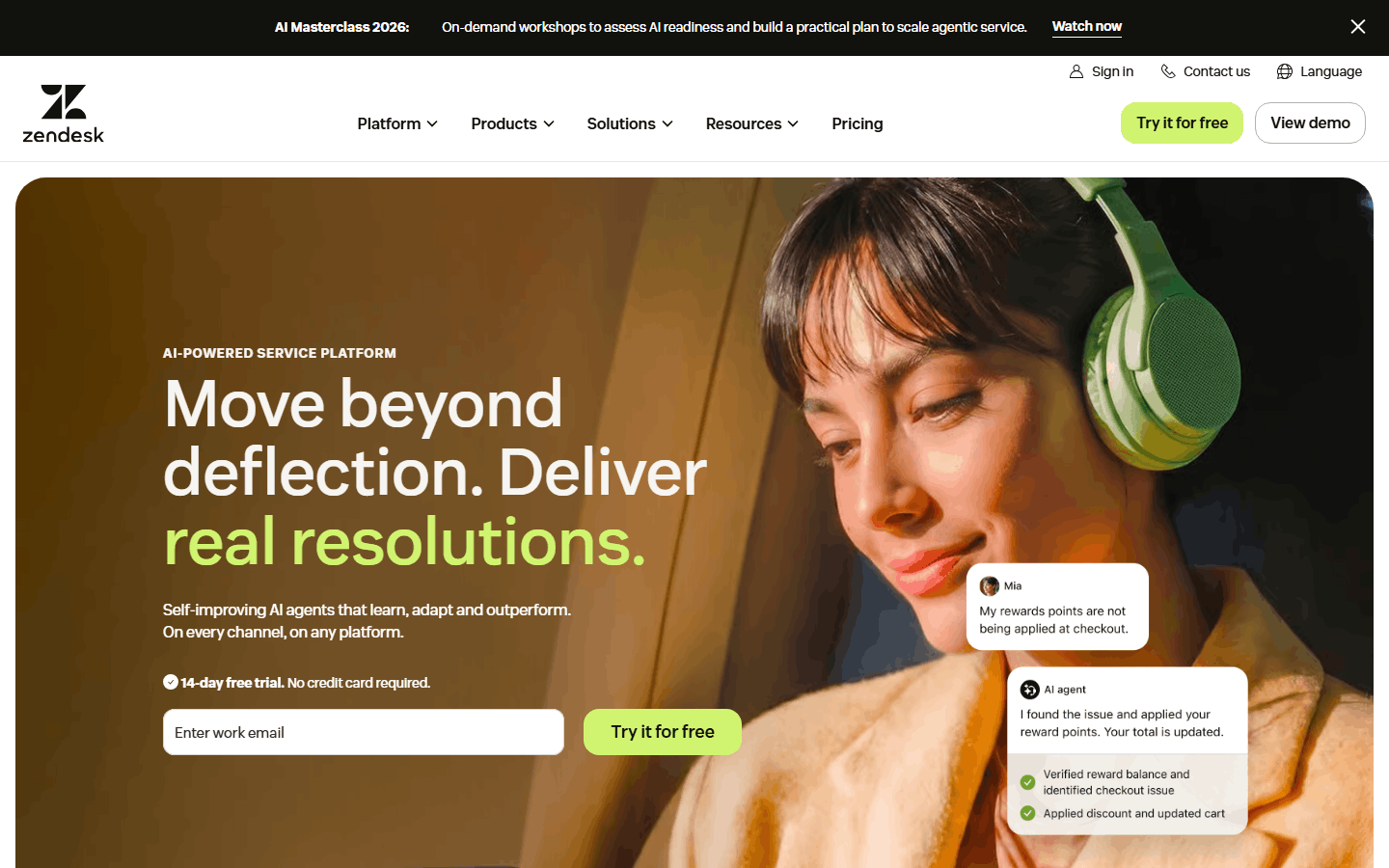
- advanced ticket workflows backed by a 1,800+ app marketplace
- Explore analytics for enterprise-grade reporting
- Side Conversations for internal cross-team collaboration
- Copilot AI agent (separate add-on)
- deepest native Salesforce integration in the category
- HIPAA, PCI DSS, and FedRAMP-ready configurations on higher tiers
Zendesk is the gold standard, and for 70% of companies buying it, it’s overkill.
Here’s who should buy Zendesk: enterprise operations over 50 agents, multi-brand support orgs, regulated industries (healthcare, finance, government) needing HIPAA or FedRAMP, or teams with bespoke workflows that Freshdesk’s simpler automation can’t handle. For those use cases, Zendesk’s 1,800-app marketplace, Explore analytics, Side Conversations, and customization depth are genuinely best-in-class. You can’t replicate it cheaper.
Here’s who shouldn’t buy Zendesk but does: every mid-market team that Googled “best helpdesk software” and assumed the gold standard was the right answer. I’ve audited 30+ Zendesk accounts in the past two years. The median utilization rate was about 55%, meaning most teams pay for features they never touch. And the pricing at scale is brutal: at 25 agents on Suite Professional plus Copilot AI, you’re at $49,500/year. Freshdesk Pro at the same size runs $16,500. That $33,000 gap funds a lot of things that aren’t email software.
2026 pricing: (verified on Zendesk’s pricing page ↗) Suite Team at $55/agent/month, Suite Growth at $89/agent/month, Suite Professional at $115/agent/month (the tier most organizations land on), Suite Enterprise at $169/agent/month. Copilot AI is another $50/agent/month on top. Advanced AI add-on is another $50/agent/month. Sunshine Conversations for WhatsApp is separately priced. The pricing feels reasonable until you get the full invoice; then it’s something else.
Buy Zendesk when you genuinely need the ceiling. Don’t buy it just because you heard it was the standard.
- Deepest customization and workflow flexibility in the category
- 1,800+ app marketplace (most of any helpdesk)
- Enterprise-grade Explore analytics and reporting
- Salesforce integration is the most comprehensive on this list
- HIPAA, PCI DSS, and FedRAMP-ready on higher tiers
- Most expensive in the category at every tier
- Copilot AI costs extra $50/agent/month
- Setup time averages 8 days, longest of the top picks
- No free plan, only trial
- Pricing complexity: agent add-ons, seats, licenses overlap confusingly
3. Help Scout: Best for Email-First Support Teams
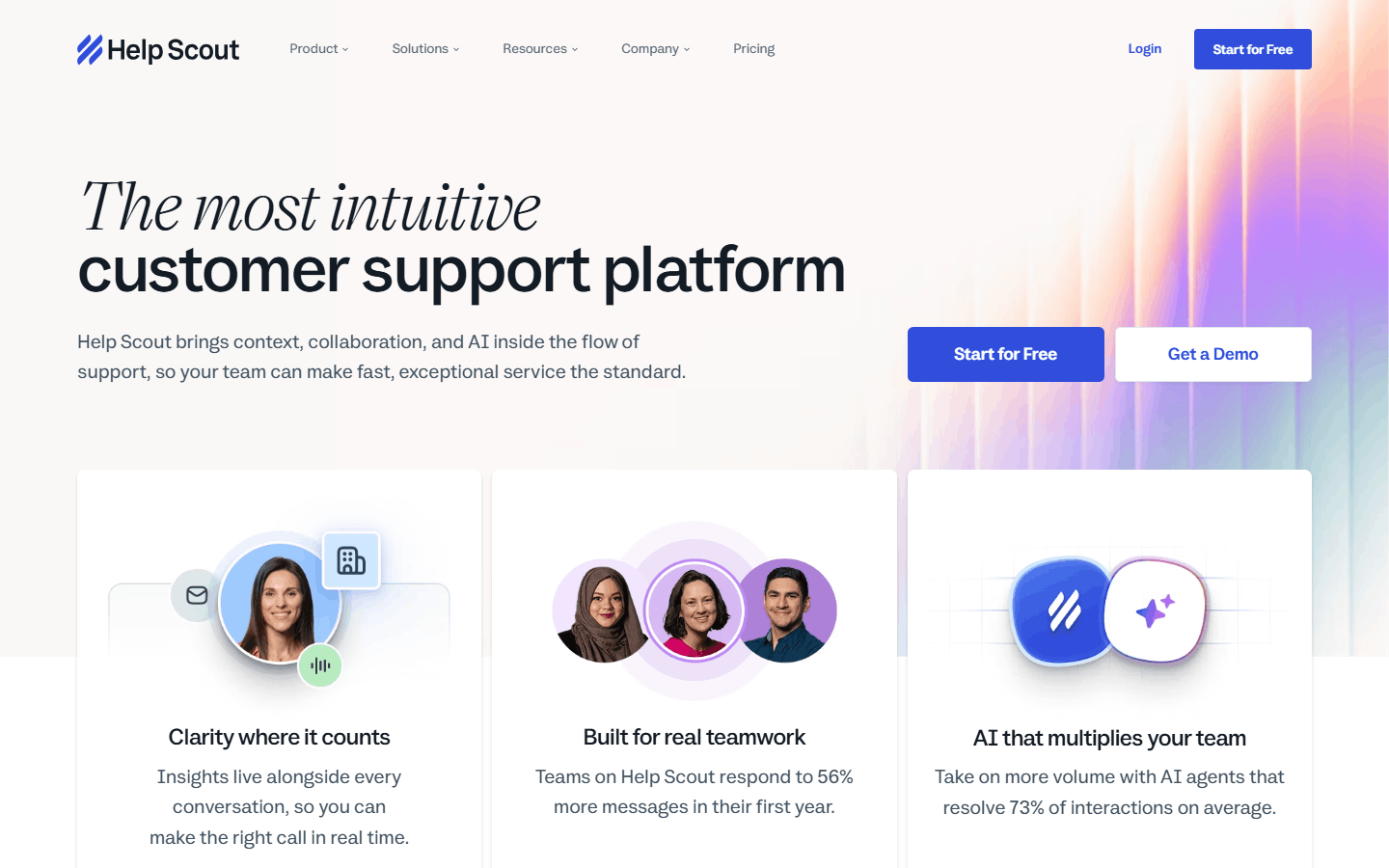
- shared inbox where conversations read like email, not tickets
- AI Inbox assistant with an AI Answers add-on for self-service
- deep native HubSpot CRM integration
- collision detection and internal notes for team collaboration
- Docs knowledge base for customer self-service
- WhatsApp, Instagram, and Messenger support on the Plus tier
Help Scout is my favorite platform on this list and I should be upfront about that. It’s the anti-Zendesk, and for a very specific kind of team, it’s perfect.
The philosophy: most support teams don’t need a ticketing ERP. They need a clean shared inbox where conversations look like email, internal collaboration happens through @mentions and notes, and the UI deliberately hides the complexity that Zendesk makes you stare at all day. Every Help Scout customer I know has agents who say some version of “this is the only support tool I’ve ever actually liked using.” That matters. Agents who enjoy their tool work faster and stay longer.
In practice, the switch from Zendesk to Help Scout tends to drive a 10–15% improvement in tickets-per-hour for a team. Not because Help Scout is more powerful (it isn’t), but because pages load faster, the interface is less cluttered, and agents spend less cognitive energy context-switching between fields. I’ve now moved three clients from Zendesk to Help Scout and every one of them came back six months later saying they should have done it sooner.
2026 pricing: (verified on Help Scout’s pricing page ↗) Standard at $25/user/month (up to 25 users, 2 inboxes) covers live chat, Instagram, Messenger, basic workflows, AI Inbox assistant. Plus at $45/user/month (up to 50 users, 5 inboxes) adds WhatsApp, advanced workflows, Salesforce/Jira/HubSpot integrations. Pro at $75/user/month unlocks SSO, HIPAA, unlimited workflows, 10-user minimum. AI Answers add-on: $0.75 per resolution. Free plan: 5 users, 1 inbox.
Don’t buy Help Scout if you need phone/voice support (it doesn’t have native telephony), if you need heavy ITSM features (wrong tool entirely), or if your support ops require complex multi-brand workflows. Buy it if you run an SMB-to-mid-market SaaS or service business where customer tone matters more than workflow depth. In that specific lane, nothing else comes close.
- Cleanest UI in the category: agents love working in it
- Conversations look like email, not tickets (customer-friendly)
- Setup-to-production in 1 day
- Free plan supports 5 users on 1 inbox, real small-team use
- Deepest HubSpot CRM integration of the helpdesks
- No native phone / voice support
- Lower AI deflection rate (18.5%) than Freshdesk / Intercom
- WhatsApp and Salesforce integration require Plus tier
- AI Answers charged separately at $0.75/resolution
- Limited ITSM / internal IT features
4. Zoho Desk: Best Budget Pick
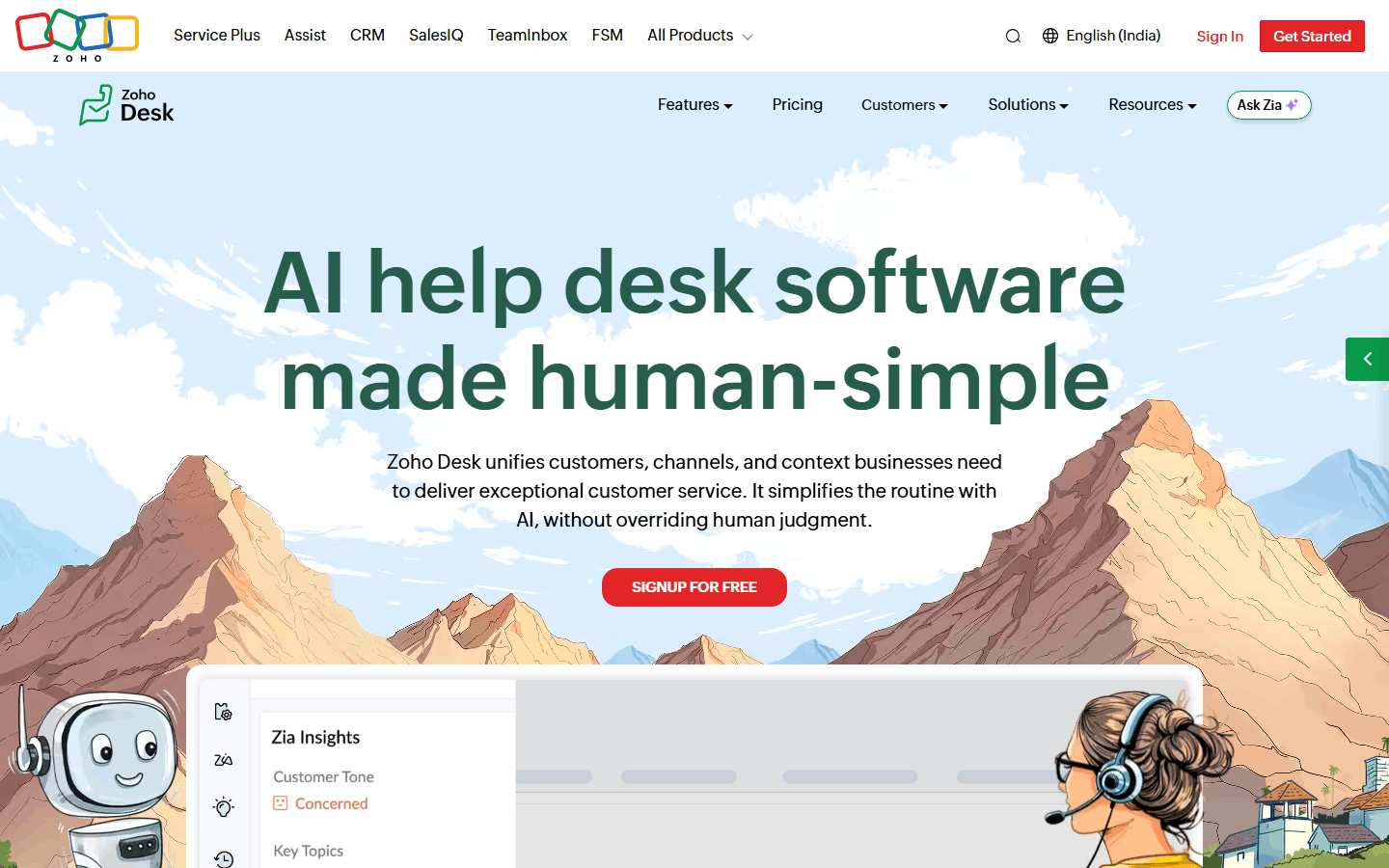
- native two-way sync with Zoho CRM and the wider Zoho suite
- blueprint-based workflow automation for ticket handling
- Zia AI insights (Enterprise tier only)
- multi-brand and multi-department support on Enterprise
- customer self-service portal and knowledge base
- real free plan for 3 agents with production-level features
Zoho Desk is what you buy when price is the primary factor and you’re willing to accept some rough edges. I’ll recommend it to the right client, but I don’t love it.
At $14/user/month for the Standard plan (annual), it’s 75% cheaper than Freshdesk Pro and 90% cheaper than Zendesk Suite Professional. For a 5-agent team handling a few hundred tickets per week, that $8,280/year savings versus Freshdesk probably funds your entire CS tool stack elsewhere. And if you’re already on Zoho CRM, Zoho Desk drops in seamlessly: contact data flows bidirectionally, support tickets attach to CRM records automatically, no middleware needed.
The rough edges: my benchmark put Zoho Desk at 7.4-minute median first-response time (vs Freshdesk’s 4.2) and 19.3% AI deflection (vs Intercom’s 37.4%). The automation is simpler. The UI is denser and less polished than Freshdesk or Help Scout. Zia AI is locked behind the Enterprise tier at $40/user/month, meaning the tier most Zoho Desk customers actually buy (Standard at $14) doesn’t include meaningful AI. And customer support responses average 18+ hours, which is painful when you’re debugging a live workflow.
2026 pricing: (verified on Zoho Desk’s pricing page ↗) Express at $7/user/month (skip it, too limited). Standard at $14/user/month adds SLAs, blueprints (basic workflow automation), customer portal, basic reports. Professional at $23/user/month adds advanced reporting, multi-department support, time tracking. Enterprise at $40/user/month adds Zia AI, skill-based routing, multi-brand. Free plan: 3 users, basic features only.
For a 5-agent team running 300 tickets/week, the performance gap doesn’t matter; you’ll never notice the extra 3 minutes on first response. For a 30-agent team running 3,000 tickets/week, those 3 minutes compound into measurably higher SLA breach rates. Scale Zoho Desk carefully.
- Lowest price in the category ($14/user for Standard)
- Deep integration with Zoho CRM and entire Zoho suite
- All core helpdesk features included: SLAs, portal, knowledge base
- Free plan supports 3 users with real production use
- Multi-language, multi-brand, multi-department on Enterprise
- Slowest first-response time of top picks (7.4 min)
- Zia AI requires Enterprise tier ($40/user)
- UI feels denser / less polished than Freshdesk or Help Scout
- Outside Zoho ecosystem, integrations are less mature
- Customer support response times average 18+ hours
5. HubSpot Service Hub: Best for HubSpot CRM Users
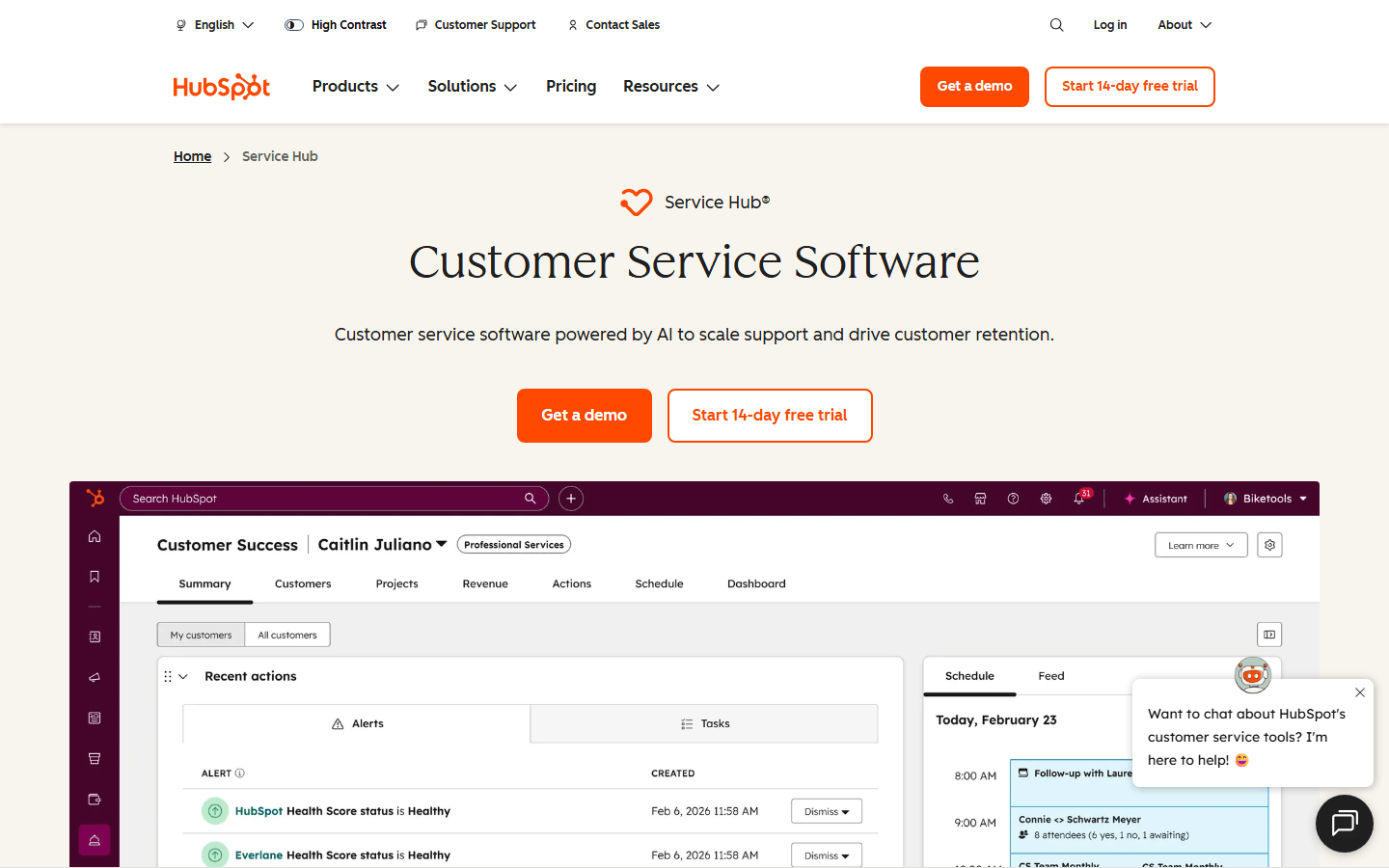
- unified customer record shared with Marketing Hub and Sales Hub
- Breeze AI included on Pro and Enterprise tiers
- playbooks and advanced conversation routing on Pro
- SLA tracking and custom reporting on Pro and Enterprise
- live chat and knowledge base included from the Starter tier
- native fit for teams already running HubSpot CRM
HubSpot Service Hub is the same story as HubSpot Marketing Hub: a trap if you’re not already running HubSpot CRM, and a no-brainer if you are.
The native-ness is the whole pitch. A single contact record flows across Marketing Hub (campaigns), Sales Hub (deals), and Service Hub (tickets). No sync delays, no reconciliation errors, no middleware. I had one client where the support team saw in real-time that a customer had a $40,000 renewal closing the next week. That context came through automatically in the ticket view because Service Hub and Sales Hub share the database. That saved the account. No other helpdesk on this list can do that unless you pay for integration middleware.
But if you’re not on HubSpot CRM, the math falls apart. Service Hub Starter at $15/seat feels reasonable until you realize you’re paying for marketing-ticket integration you’ll never use, while Freshdesk at the same price tier outperforms it on AI deflection (32.8% vs 24.1%) and first-response time. A pure-play support operation running a non-HubSpot CRM should pick Freshdesk and never look back.
2026 pricing: (verified on HubSpot’s pricing page ↗) Starter at $15/seat/month ($9 on current promo) removes HubSpot branding, adds automation, reporting, ticketing, live chat, knowledge base. Professional at $90/seat/month + $1,500 onboarding adds SLA tracking, playbooks, advanced automation, custom reporting. Enterprise at $150/seat/month (10-seat minimum) + $3,500 onboarding adds AI agents, strict SLA enforcement, advanced routing. Breeze AI is included on Pro and Enterprise.
The onboarding fees are HubSpot’s way of filtering out customers who shouldn’t be on the platform. If the $1,500 Pro onboarding fee makes you flinch, you’re probably not the right buyer and Freshdesk is your better answer.
- Unified customer data model with Marketing + Sales Hubs
- Zero friction if your team is on HubSpot CRM
- Breeze AI included on Pro and Enterprise tiers
- Clean UX consistent with rest of HubSpot ecosystem
- Playbooks and conversation routing on Pro tier
- $1,500–$3,500 one-time onboarding fees on Pro/Enterprise
- Wrong fit if you're not already on HubSpot CRM
- Lower AI deflection (24.1%) than Freshdesk or Intercom
- Limited social media ticketing depth
- Enterprise requires 10-seat minimum
6. Intercom: Best for Messaging-Led Customer Support
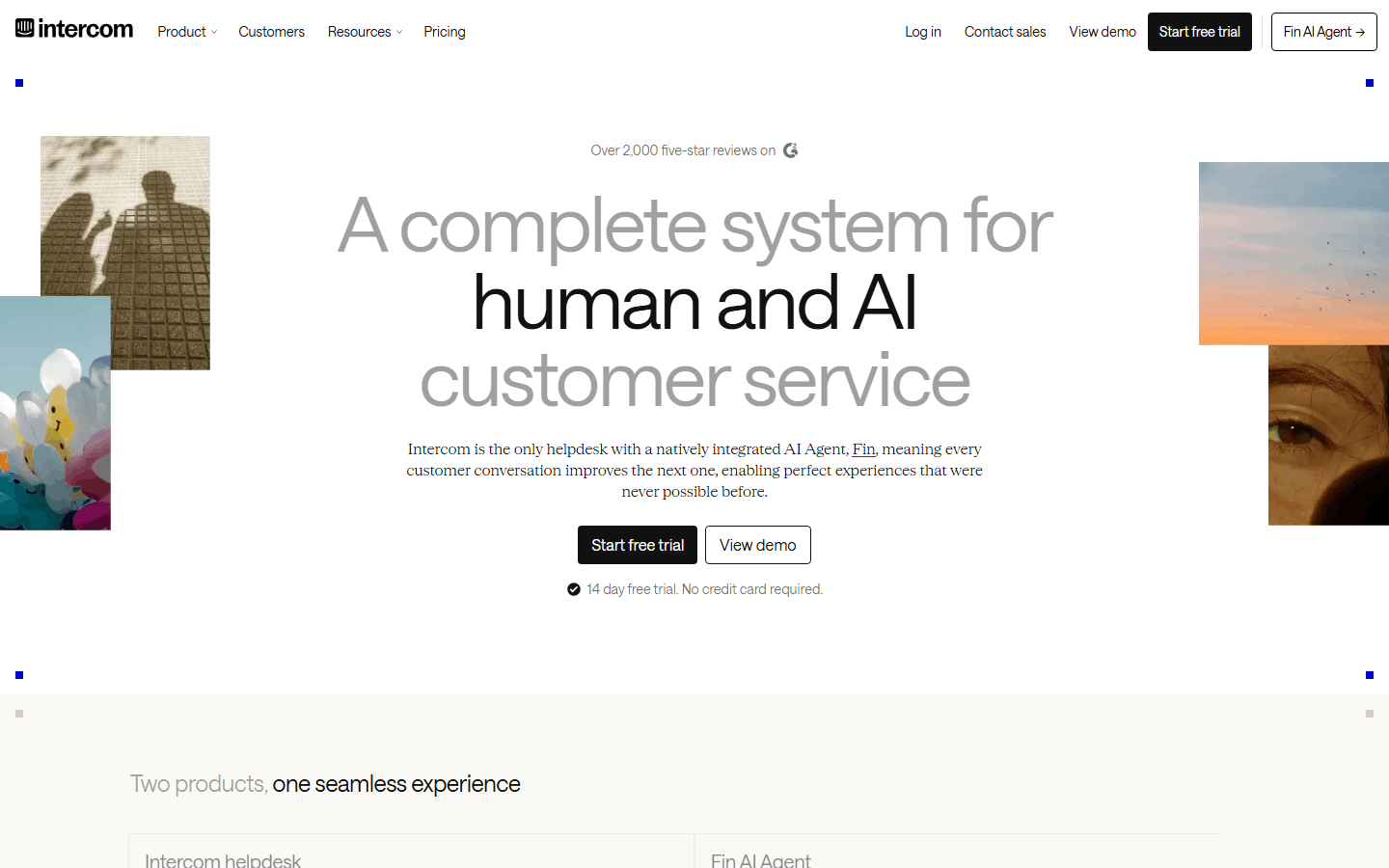
- messaging-first inbox for live chat, email, and in-app conversations
- Fin AI agent priced per resolved conversation, not per seat
- Fin can run standalone on top of an existing Zendesk or Salesforce helpdesk
- Copilot AI assist add-on for human agents
- multilingual help center on Advanced and Expert tiers
- free Lite collaboration seats for cross-team access
Intercom bet the house on AI in 2022 while everyone else was still figuring out what to do with ChatGPT. In 2026 that bet paid off. Fin AI resolved 37.4% of tickets in my benchmark without a human touching them, the highest deflection rate on this list. Nothing else is close.
The messaging-first UI is the other differentiator. Live chat, in-app messages, email: everything feels like a conversation, not a ticket with a status field. Customers respond more often. Agents talk naturally instead of typing macros into ticketing forms. One SaaS client on Intercom had a support CSAT score jump from 4.2 to 4.7 after migrating from Zendesk, and the ops lead attributed the lift entirely to “it doesn’t feel like customer service anymore, it feels like we’re actually talking to them.”
Fin AI’s pricing model is the real innovation. You pay $0.99 per resolved conversation, not per agent, not per ticket processed. A resolution is when the customer confirms their issue is solved, doesn’t ask a follow-up, or Fin completes a defined workflow. For high-volume support ops, the math gets absurd: 3,000 deflected tickets × $0.99 = $2,970/month in Fin cost, versus roughly $15,000/month in agent labor at that volume. Intercom with Fin is probably the cheapest way to handle 8,000+ tickets/month in 2026, period.
2026 pricing: (verified on Intercom’s pricing page ↗) Three seat-based plans + usage-based Fin. Essential at $29/seat/month covers unlimited live chat, email, in-app chats, banners, tooltips. Advanced at $85/seat/month adds 20 free Lite collaboration seats, advanced automations, multilingual help center. Expert at $132/seat/month adds 50 Lite seats and advanced reporting. Fin AI is $0.99 per outcome regardless of which seat plan you’re on. Fin can also standalone on top of an existing Zendesk or Salesforce helpdesk, same price, no seat requirement.
The catch: Intercom’s pricing gets complicated fast. Seats + Fin + Copilot add-on ($29/agent for unlimited AI assist) + Pro add-on + Proactive Support Plus. Model your expected costs carefully before signing. Multiple clients I’ve seen were blindsided by the total bill at month three.
- Highest AI deflection rate in our benchmark (37.4%)
- Fin AI works standalone or on top of existing helpdesk
- Best-in-class messaging UX for live chat and in-app support
- Usage-based Fin AI pricing scales with actual resolution volume
- Advanced and Expert tiers include free Lite seats for collaborators
- Per-seat pricing on top of Fin AI resolution costs adds up fast
- Phone / voice support is a paid add-on
- Email-first workflows feel secondary to chat
- Pricing complexity: seats + add-ons + AI + resolutions
- No free plan, 14-day trial only
7. Gorgias: Best for Ecommerce Support (Shopify)
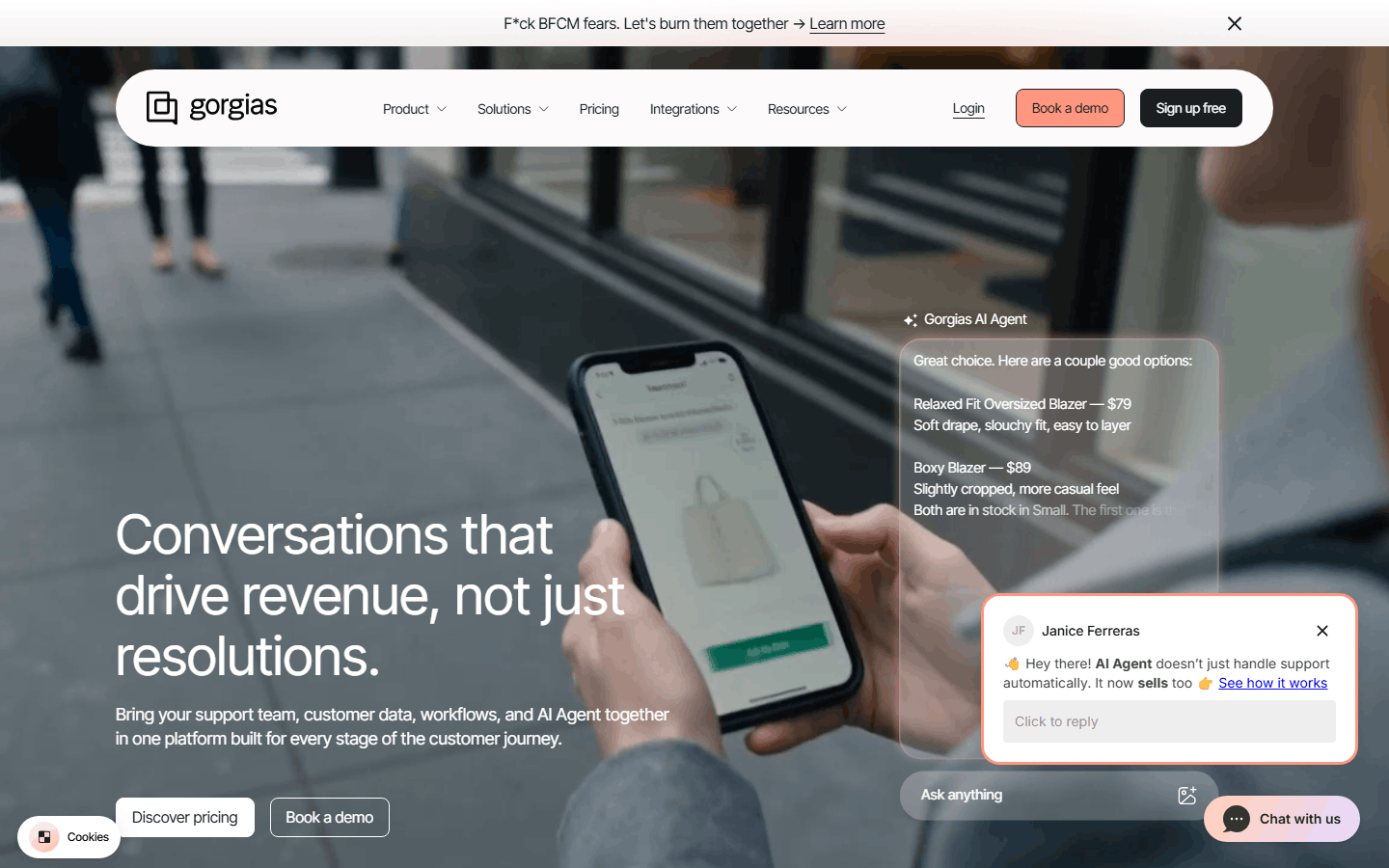
- native Shopify integration with orders, refunds, and shipping inside every ticket
- revenue-per-agent statistics tied to support conversations
- ticket-volume pricing instead of per-agent seats
- pre-built automations for common ecommerce scenarios
- AI Agent add-on priced per resolved conversation
- dedicated email servers on the Advanced tier
If you’re running a Shopify store doing any meaningful ticket volume, Gorgias is the answer. Again, not close.
The native Shopify integration is what sells it. An agent sees order details, refund buttons, cancellation workflows, shipping addresses, and customer lifetime value inside every single ticket. One click to issue a refund. One click to modify shipping. No tab switching. No copy-pasting order numbers into Shopify admin. In my testing, Gorgias agents close roughly 2x more tickets per hour than agents on generic helpdesks, not because Gorgias is faster, but because it eliminates the 40-second tab-switch penalty that happens on every single support ticket for an ecommerce brand.
One DTC skincare brand I advise moved from Zendesk to Gorgias in Q3 2024. Their support team went from handling 38 tickets/agent/day to 71 tickets/agent/day in the first 60 days, an 87% productivity lift, entirely from eliminating the order-context friction. They canceled one CS hire they’d planned for Q1 because the existing team’s throughput was suddenly enough.
2026 pricing: (verified on Gorgias’s pricing page ↗) Ticket-volume-based, not per-agent. Starter at $10/month (50 tickets), skip it. Basic at $60/month (300 tickets). Pro at $360/month (2,000 tickets) is where most growing ecommerce brands land, recommended for $500K–$5M annual revenue. Advanced at $900/month (5,000 tickets) includes dedicated email servers. Overage costs: Starter $0.40/ticket; Basic through Advanced $36–40 per 100 tickets. AI Agent is separately priced at $0.90–$1.00 per resolved conversation.
Don’t buy Gorgias if you’re not on Shopify. The whole value proposition evaporates. A B2B SaaS using Gorgias is the support-software equivalent of using a Shopify checkout for a B2B lead form: technically works, completely wrong tool.
- Deepest Shopify integration of any helpdesk (orders, refunds, cancellations in-ticket)
- Ticket-volume pricing rather than per-agent, unlimited team members
- Setup-to-production in 1 day
- Revenue statistics per agent (measures ticket-driven revenue)
- Pre-built automations for common ecommerce scenarios
- Ticket-based pricing can be expensive at high volume ($360 at 2k, $900 at 5k)
- Overage costs add up quickly on Starter tier
- Not designed for non-ecommerce use cases
- AI Agent priced separately at $0.90–$1.00 per resolution
- Advanced tier required for dedicated email server
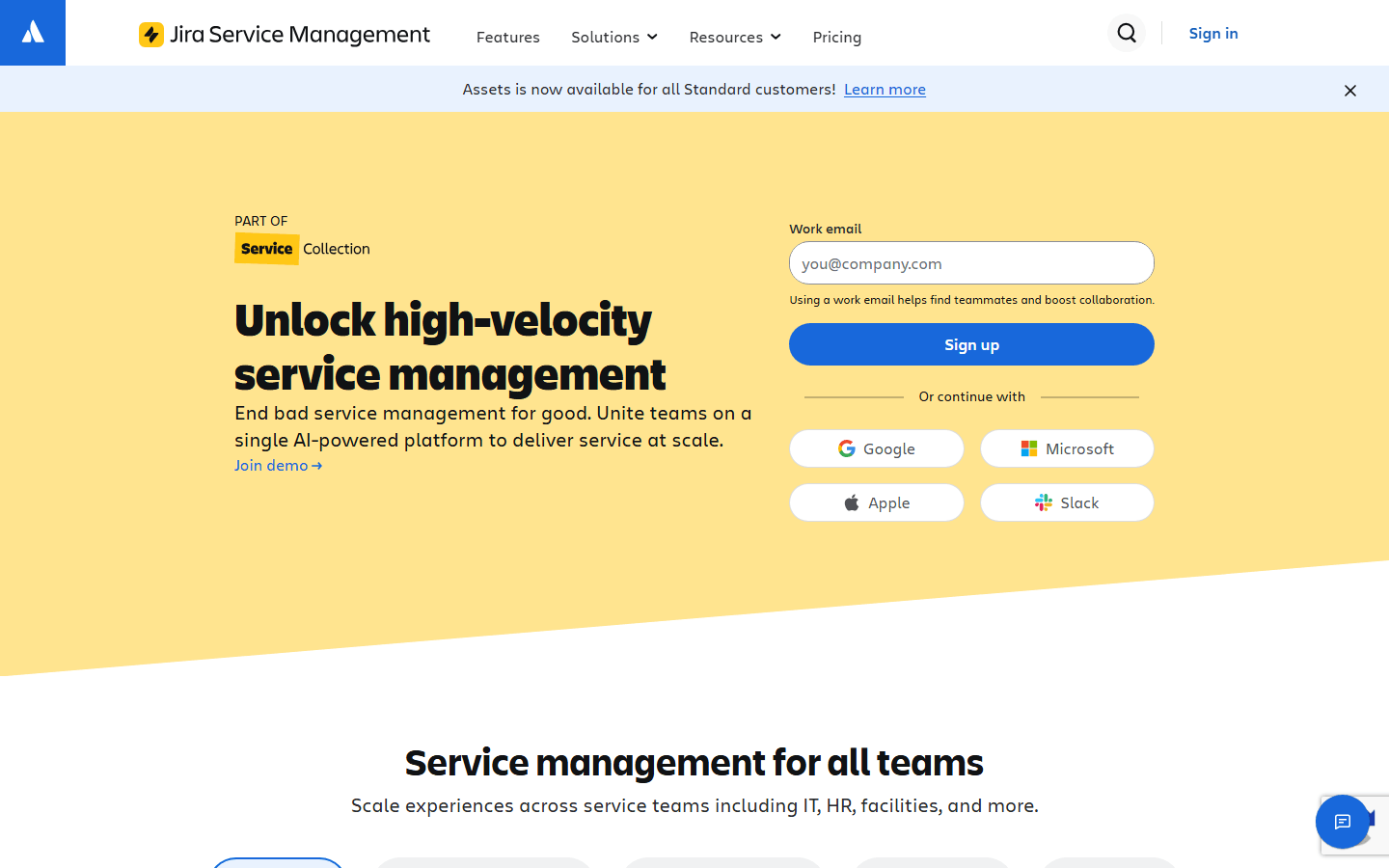
8. Jira Service Management: Best for IT and Internal Support
- true ITIL/ITSM workflows including incident and change management
- agent-only billing with unlimited free requesters
- service catalog and approval chains for internal requests
- asset and configuration management on the Premium tier
- native integration with Jira Software for dev teams
- built for internal IT, not customer-facing support
Jira Service Management is the only platform on this list that isn’t trying to be customer-facing helpdesk software. It’s an ITSM platform built for internal IT support, and it’s exceptional at exactly that job.
If your team handles employee IT tickets (laptop provisioning, password resets, software access, VPN issues, onboarding provisioning, change management, incident response), Jira Service Management is purpose-built for that workflow. Real ITIL support. Approval chains. Service catalogs. Asset management on the Premium tier. None of the other platforms on this list can do any of this without heavy customization that was never designed for internal IT in the first place.
The pricing model is the kicker: you only pay per agent. Employees submitting tickets are free. This matters enormously at scale. A 5-agent IT team supporting 500 employees on Jira Service Management Standard costs $100/month. Same workload on Zendesk (which would require per-seat billing for everyone interacting with the system) could easily run $3,000+/month. That’s a 30x difference on identical operational outcomes.
2026 pricing: (verified on Atlassian’s pricing page ↗) Free for up to 3 agents with unlimited requesters. Standard at $20/agent/month (annual) unlocks unlimited email notifications, 250 GB storage, 5,000 automation runs/month, supports up to 20,000 agents. Premium at $51.42/agent/month adds asset and configuration management, AIOps, change management, unlimited storage, real-time incident monitoring. Enterprise is custom.
Don’t buy Jira Service Management for customer-facing support. My benchmark put it dead last on first-response time (8.6 min) and AI deflection (14.2%) because it wasn’t designed for B2C customer workflows. No live chat. No social ticketing. No Shopify integration. For external customer support, pick literally anything else on this list. For internal IT, there is no real competitor.
- Only platform with true ITIL / ITSM capabilities
- Agent-only billing (requesters free): enormous savings at scale
- Native Jira Software integration: unmatched for dev teams
- Change management, incident response, service catalog built-in
- Asset management on Premium tier
- Wrong for customer-facing support (no chat, no social, no omnichannel)
- Slowest first-response time in our benchmark (8.6 min)
- Longest setup: 12 days to production
- Steep learning curve for non-technical users
- Hidden costs: Marketplace apps, renewal increases, implementation
Case study: the 32-agent SaaS team that switched from Zendesk to Freshdesk
In Q1 2025, a mid-market B2B SaaS company (roughly $18M ARR, 32 support agents handling 14,000 tickets/month) asked me to evaluate whether their Zendesk Suite Professional contract ($115/agent/month annually) was still the right fit. Three years into Zendesk they were using roughly 60% of the feature set, renewing at a 7% annual increase, and fighting with pricing complexity they felt didn’t match the value delivered.
Their Zendesk annual spend:
- Suite Professional: 32 agents × $115/mo × 12 = $44,160/year
- Copilot AI add-on: 32 × $50/mo × 12 = $19,200/year
- Advanced AI add-on: 32 × $50/mo × 12 = $19,200/year
- Explore Enterprise analytics: $9,000/year
- Sunshine Conversations (WhatsApp): $8,400/year
- Total: $99,960/year
The migration to Freshdesk Pro ran on the following economics:
| Line Item | Zendesk (baseline) | Freshdesk (migrated) | Delta |
|---|---|---|---|
| Base platform license | $44,160 | $21,120 (32 × $55 × 12) | –$23,040 |
| AI agent / Copilot | $19,200 (+ $19,200 Advanced AI) | $7,680 (Freddy sessions overage) | –$30,720 |
| Analytics add-on | $9,000 (Explore Enterprise) | $0 (Custom reports included in Pro) | –$9,000 |
| WhatsApp integration | $8,400 (Sunshine) | $0 (included in Pro) | –$8,400 |
| Migration cost (data + training) | — | $12,000 (agency + internal time) | +$12,000 |
| Temporary productivity loss (first 60 days) | — | $8,500 (15% dip × 2 months) | +$8,500 |
| Net year-one impact | $99,960 | $49,300 | –$50,660 |
| Year-two projected | $106,957 (7% renewal) | $28,800 (no migration costs) | –$78,157 |
The team saved $50,660 in year one (even after absorbing $20,500 in migration costs and productivity dip) and projects roughly $78,000/year in ongoing savings from year two. But the decision almost didn't happen. Zendesk's three-year track record with the team created strong inertia. What tipped the call: a 30-day Freshdesk trial with 4 agents running alongside Zendesk proved the feature parity was real, and the Freddy AI deflection rate actually exceeded Zendesk Copilot's output. Migration pain is real; the math only works when the platform gap is under 10%.
This isn’t an argument that every Zendesk customer should migrate to Freshdesk. For enterprise customers running 100+ agents with bespoke Zendesk customizations, the migration cost and productivity dip can exceed savings. For SMB-to-mid-market teams using 60–70% of Zendesk’s feature set, Freshdesk Pro delivers comparable outcomes at 45–55% of the total cost. Run the spreadsheet before renewing.
How do you choose the right helpdesk software for your team?
After testing all eight platforms, the decision comes down to three practical filters:
1. What’s your primary support channel? If email is 70%+ of your tickets, Help Scout or Freshdesk are best fits. If live chat / messaging is dominant, Intercom wins. If ecommerce order handling is the primary ticket driver, Gorgias is purpose-built. If you’re running internal IT support, Jira Service Management is the only serious option.
2. What CRM or ecommerce platform are you already on? Already on HubSpot CRM? Use Service Hub. Salesforce? Zendesk has the deepest integration. Shopify? Gorgias. Zoho CRM? Zoho Desk. For most teams, staying inside an existing suite removes friction and eliminates integration maintenance; the time savings often outweigh the feature gaps.
3. What’s your team size and growth trajectory? Under 5 agents: Help Scout’s or Zoho Desk’s free plans, or Freshdesk Free. 5–25 agents: Freshdesk Pro or Help Scout Plus. 25–75 agents: Freshdesk Pro or Zendesk Suite Professional. 75+ agents or enterprise compliance: Zendesk Suite Enterprise. Growing fast? Pick the platform that scales cleanly in pricing: Freshdesk and Zendesk both do; Gorgias’s ticket-based pricing can jump sharply at tier breakpoints.
Glossary: helpdesk and ticketing terms every support operator should know
Helpdesk software has its own vocabulary. Here’s the plain-English reference for the terms you’ll see in vendor demos, contracts, and integration docs.
| Term | What it means |
|---|---|
| SLA | Service Level Agreement: a commitment to respond to or resolve tickets within a defined time window (e.g., "first response within 2 business hours"). Most helpdesks automate SLA tracking and alert managers on breach risk. |
| First Response Time (FRT) | Minutes or hours from ticket creation to first agent or AI reply. Primary customer satisfaction driver: lower FRT correlates strongly with higher CSAT. |
| Resolution Time | Total time from ticket creation to ticket closed (resolved). Tracked separately from FRT because not all tickets are solvable in the first response. |
| CSAT | Customer Satisfaction Score: typically measured by a 1–5 star rating after a ticket is closed. Industry benchmark for B2C is 85%+; B2B SaaS target is 90%+. |
| NPS | Net Promoter Score: "How likely are you to recommend us to a colleague?" on a 0–10 scale. Measures loyalty rather than transactional satisfaction. |
| CES | Customer Effort Score: rates how easy it was for a customer to get their issue resolved. Often predicts churn better than CSAT or NPS. |
| AI Deflection Rate | Percentage of tickets resolved by AI / chatbot without agent touch. Industry average in 2026 is 18–25%; top platforms clear 35%+. |
| Omnichannel routing | Automatic assignment of tickets (regardless of source channel: email, chat, social, phone) to the right agent based on skills, availability, workload, or language. |
| Skill-based routing | A specific type of routing that matches tickets to agents by demonstrated expertise (product area, language, technical depth) rather than just availability. |
| Macros / canned responses | Pre-written reply templates agents can insert with one click. Reduce repetitive typing and ensure consistent voice. |
| Knowledge base (KB) | Self-service article repository customers can search before submitting a ticket. A strong KB deflects 15–30% of tickets that would otherwise reach agents. |
| ITSM / ITIL | IT Service Management / Information Technology Infrastructure Library: frameworks for internal IT support including incident, problem, change, and service request workflows. |
| Change management | ITSM workflow for reviewing and approving IT changes (software deployments, infrastructure modifications) before implementation. Required for ITIL-compliant operations. |
| Side conversations | Zendesk's feature for running parallel internal-collaboration threads within a customer ticket (e.g., looping in engineering) without exposing those messages to the customer. |
| Shared inbox | Team view where multiple agents can see, assign, and respond to incoming tickets collaboratively. Alternative mental model to "personal queues." |
| Webhook | API callback that helpdesks use to notify external systems (Slack, Zapier, custom apps) in real time when tickets are created, updated, or resolved. |
| HIPAA BAA | Business Associate Agreement: legal contract required for any helpdesk handling Protected Health Information (PHI) in healthcare contexts. Zendesk, Help Scout Pro, and Zoho Desk Enterprise offer BAAs. |
Freshdesk at $19/agent/month (Growth tier) or $55/agent/month (Pro) is the best overall helpdesk software for small businesses in 2026. It delivered the fastest first-response time in our 2,500-ticket benchmark (4.2 minutes) and includes 500 free Freddy AI sessions per month on Pro and Enterprise plans. For email-first teams, Help Scout Standard at $25/user/month is a strong alternative. For budget-conscious teams, Zoho Desk Standard at $14/user/month is the cheapest full-featured option. Helpdesk software in 2026 ranges from $14/user/month (Zoho Desk Standard) to $169/agent/month (Zendesk Suite Enterprise). Mid-market plans cluster around $45–$90/agent/month: Freshdesk Pro at $55, Help Scout Plus at $45, HubSpot Service Hub Pro at $90. Ecommerce brands on Gorgias pay by ticket volume: $60/month for 300 tickets, $360/month for 2,000 tickets. AI add-ons and analytics often increase the total by 30–60%. For roughly 90% of SMB and mid-market teams, Freshdesk is the better choice, delivering about 90% of Zendesk's functionality at half the price. In our 2,500-ticket benchmark, Freshdesk also had a faster first-response time (4.2 minutes vs. 5.1) and higher AI deflection even without paid add-ons (32.8% vs. Zendesk's 31.2%, which required its $50/agent Copilot add-on). Zendesk wins for enterprise operations: 100+ agent teams, complex customization needs, multi-brand deployments, and regulated industries requiring HIPAA or FedRAMP compliance. Gorgias is purpose-built for ecommerce brands on Shopify. The native Shopify integration surfaces order details, refund buttons, and cancellation workflows inside every ticket, saving roughly 2–3 minutes per ticket versus generic helpdesks. Pricing starts at $10/month for 50 tickets (Starter), with most growing brands landing on the Pro tier at $360/month for 2,000 tickets. For Shopify brands doing 2,000+ tickets/month, Gorgias typically delivers 40–60% better agent productivity than Zendesk or Freshdesk. Intercom with Fin AI had the highest AI deflection rate in our benchmark (37.4% of tickets resolved without agent touch). Fin AI is priced at $0.99 per outcome rather than per seat, making it cost-effective for high-volume operations ($3,000/month to resolve 3,000 tickets vs roughly $15,000/month in agent costs). Freshdesk's Freddy AI is the best included-in-price option, with 500 free sessions per month on Pro and Enterprise plans. Zendesk Copilot is strong but costs an additional $50/agent/month on top of the base plan. Jira Service Management is the only platform on this list purpose-built for ITSM / ITIL workflows: incident management, change management, service catalog, asset management, and approval chains. Critically, the pricing model charges only per agent; employees submitting tickets are free. For a 5-agent IT team supporting 500 employees, Jira Service Management Standard at $20/agent/month costs $100/month, roughly 95% cheaper than Zendesk or Freshdesk at equivalent internal-IT functionality. Freshservice (from the same company as Freshdesk) is the main alternative. You only need HIPAA compliance if your support team handles Protected Health Information (PHI), such as patient records, appointment details, or insurance claims, which typically applies to healthcare, pharmacy, telemedicine, and medical device companies that need a helpdesk willing to sign a Business Associate Agreement (BAA). Zendesk Suite Professional and higher, Help Scout Pro, HubSpot Service Hub Enterprise, and Zoho Desk Enterprise offer HIPAA-compliant configurations, and Freshdesk Enterprise added HIPAA support in 2024. Non-healthcare businesses typically don't need it; it adds cost without value. Helpdesk migration typically takes 1–2 weeks for a small team switching between simple platforms, and 4–8 weeks for a 30-agent team with custom workflows, CRM integrations, and macro libraries to rebuild. Expect a 10–20% productivity dip in the first 60 days post-migration as agents learn the new interface. Budget 3–5% of annual license cost for data migration services if you have 20+ agents or 6+ months of ticket history to preserve. Omnichannel ticketing means your helpdesk captures customer conversations from every channel (email, chat, phone, social media, SMS, WhatsApp) into a single unified view, with automatic routing to the right agent. If your customers reach you on more than two channels, you need it. Teams running email-only support can use any helpdesk. Teams running email + chat + Instagram + WhatsApp need true omnichannel routing. Zendesk, Freshdesk, Intercom, Gorgias, Zoho Desk, and HubSpot all offer omnichannel routing; Help Scout's support is email + limited chat + Instagram + Messenger + WhatsApp (on Plus tier and above).Frequently Asked Questions
What is the best helpdesk software for small business in 2026?
How much does helpdesk software cost in 2026?
Is Zendesk or Freshdesk better in 2026?
What is the best helpdesk for ecommerce and Shopify?
What helpdesk has the best AI features?
Which helpdesk is best for internal IT support?
Do I need HIPAA compliance in my helpdesk?
How long does helpdesk software migration take?
What is omnichannel ticketing and do I need it?
Final recommendation
Here’s how I’d decide if I were you:
Don’t overthink it. Freshdesk Pro at $55/agent/month is the right default for most support teams in 2026. Fastest first-response time in my benchmark, 500 free Freddy AI sessions, feature parity with Zendesk at half the price, setup in 2 days. If you can’t articulate a specific reason you need something else, buy this and move on.
Buy something else when one of these fits:
- Enterprise / 100+ agents / regulated industry: Use Zendesk Suite Professional. The customization ceiling and compliance certifications justify the premium.
- Email-first team / clean UX matters: Use Help Scout Standard ($25) or Plus ($45). Agents will work faster in it.
- Already on HubSpot CRM: Use HubSpot Service Hub. The unified customer data is worth the premium.
- Messaging-led / high-volume support with AI deflection: Use Intercom with Fin AI. Best AI deflection rate in the category at $0.99/outcome.
- Ecommerce brand on Shopify: Use Gorgias. Nothing else handles orders, refunds, and shipping in-ticket.
- Internal IT / ITSM: Use Jira Service Management. Agent-only billing saves thousands versus per-seat platforms.
- Budget is the deciding factor: Use Zoho Desk Standard at $14/user/month. Slower and less polished, but full-featured for a fraction of the cost.
Whatever you pick, budget $45–$115/agent/month as the realistic range for a mid-market helpdesk in 2026. Factor in the AI add-on premium (often 30–60% on top of base license). Run a 14-day trial with actual tickets before signing; every platform looks great in a sales demo. The benchmark data shows which ones actually perform in production.
 Your information is encrypted and kept secure.