Live Chat Support in 2026: Benefits and Best Practices
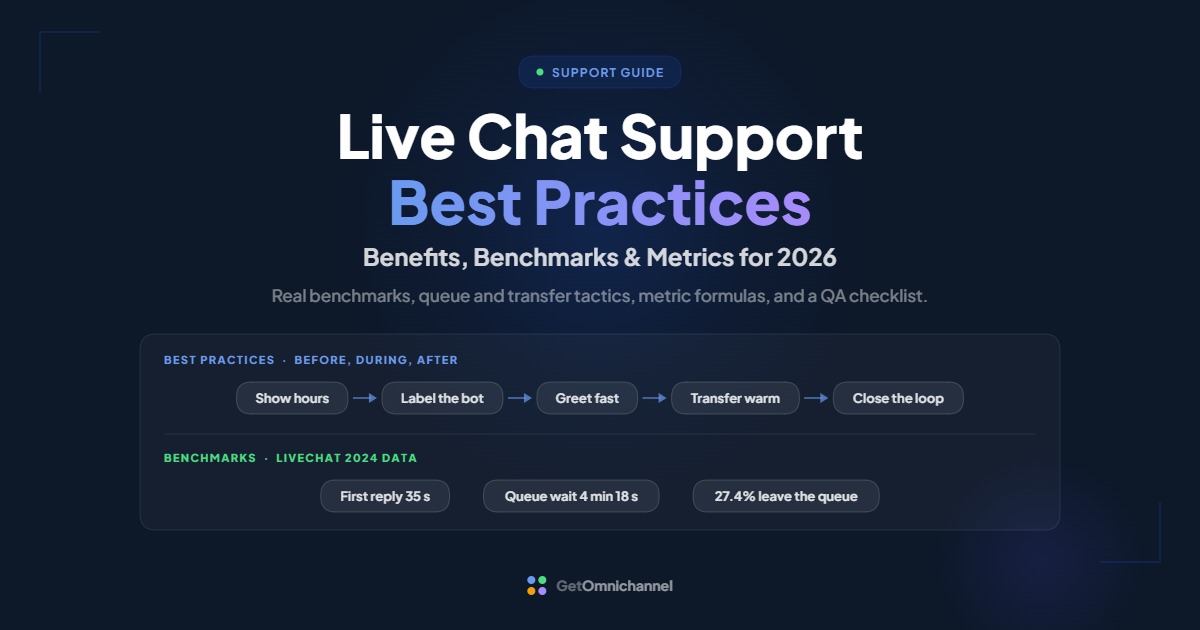
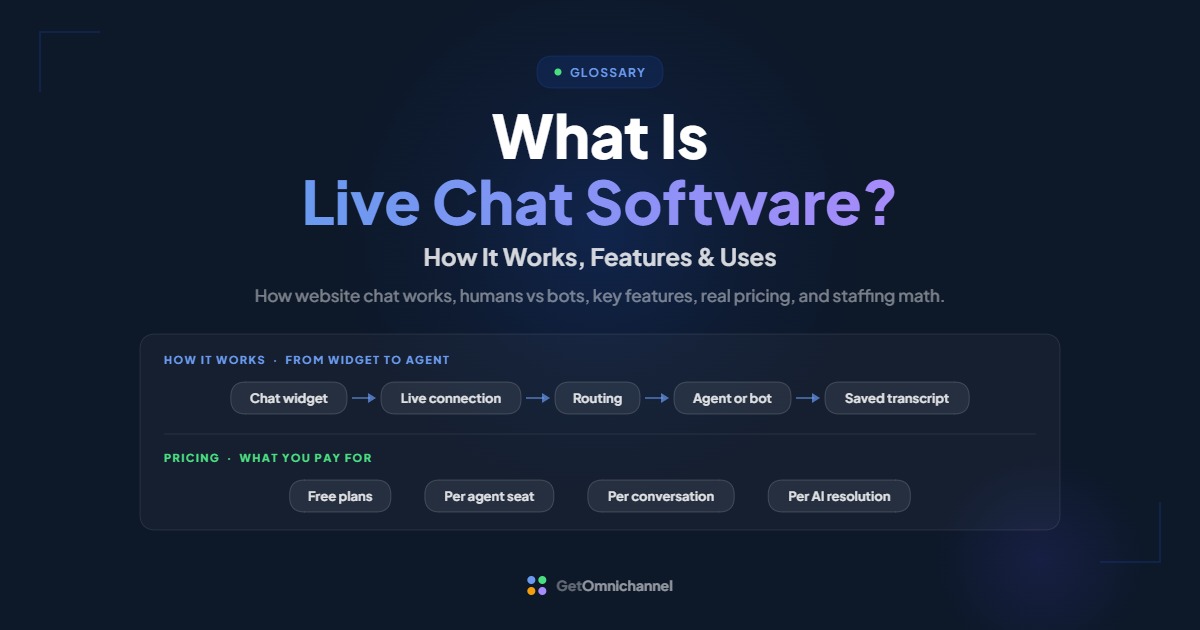
Live chat support is customer service delivered through a real-time chat window on a website or app. Agents, often helped by a chatbot, answer questions while the customer is still on the page, handle several conversations at once, and keep a written record of every exchange. This guide is about running chat support well: the … Read more
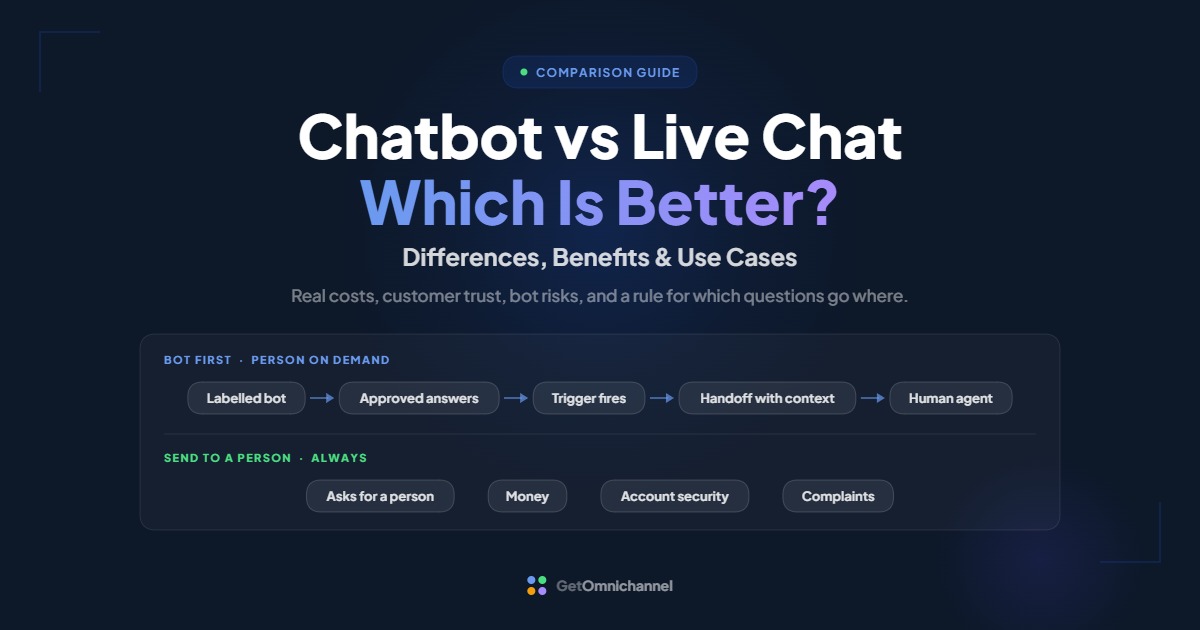
Chatbot vs Live Chat: Which Is Better for Customer Support?

Neither is better on its own. A chatbot answers repeat questions instantly and around the clock, while live chat connects customers to a person for complex, sensitive, or high-value conversations. Most support teams get the best results from a bot that handles routine questions and hands everything else to a person, with the conversation history … Read more

How Much Does VoIP Cost for a Business?

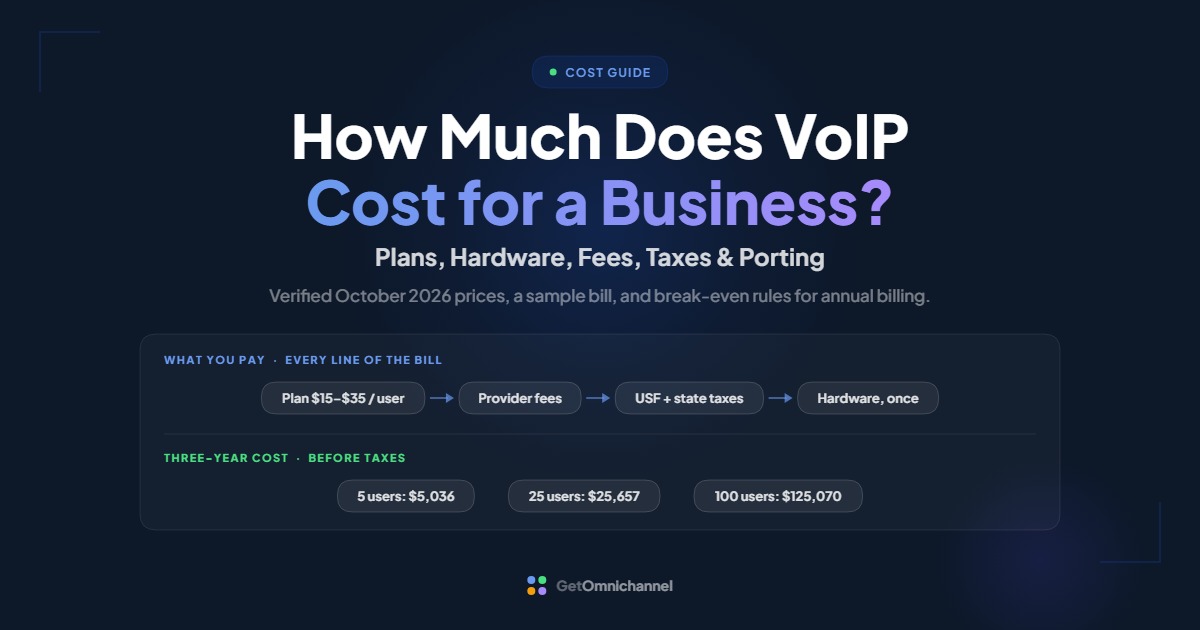
Most business VoIP plans cost $15 to $35 per user per month on annual billing, before fees and taxes. Monthly billing costs more, up to $50 per user on some plans. Provider fees, 911 charges, and taxes come on top, plus a one-time hardware cost that ranges from nothing (using the included apps) to about … Read more

How Much Internet Speed Does VoIP Need?

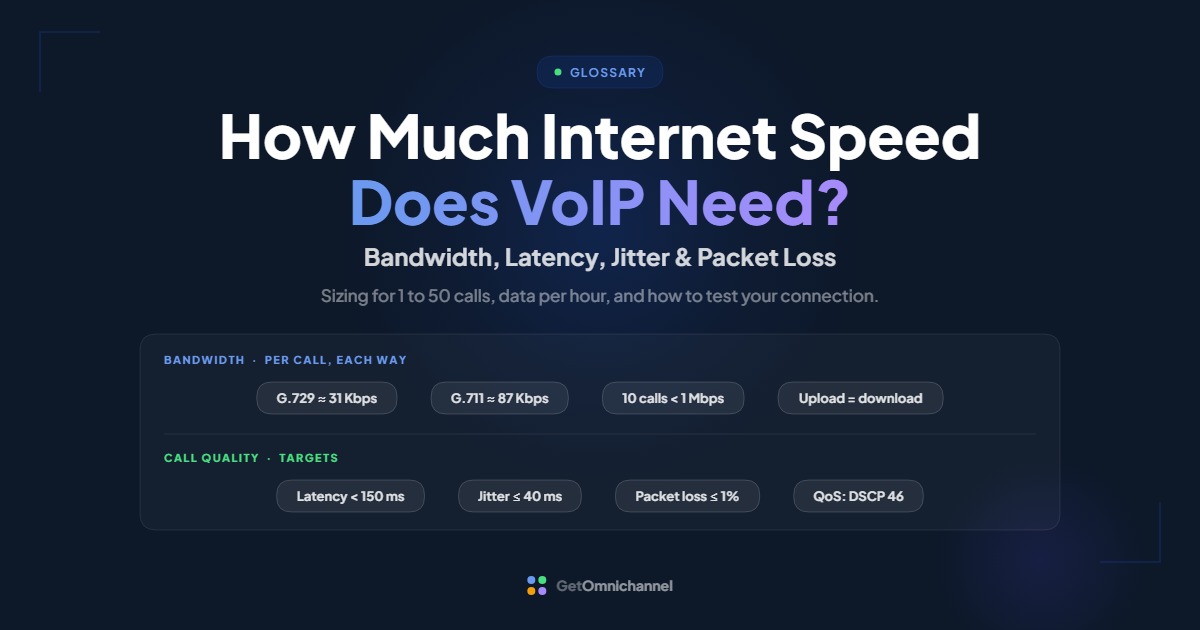
A VoIP call needs roughly 30 to 90 Kbps of bandwidth in each direction, depending on the codec, so even 10 simultaneous calls use under 1 Mbps of upload and download. Speed is rarely the problem. Call quality depends more on latency (keep one-way delay under 150 ms), jitter (under 30 to 40 ms), and … Read more

What Is SIP Trunking? How It Works, Costs & Use Cases

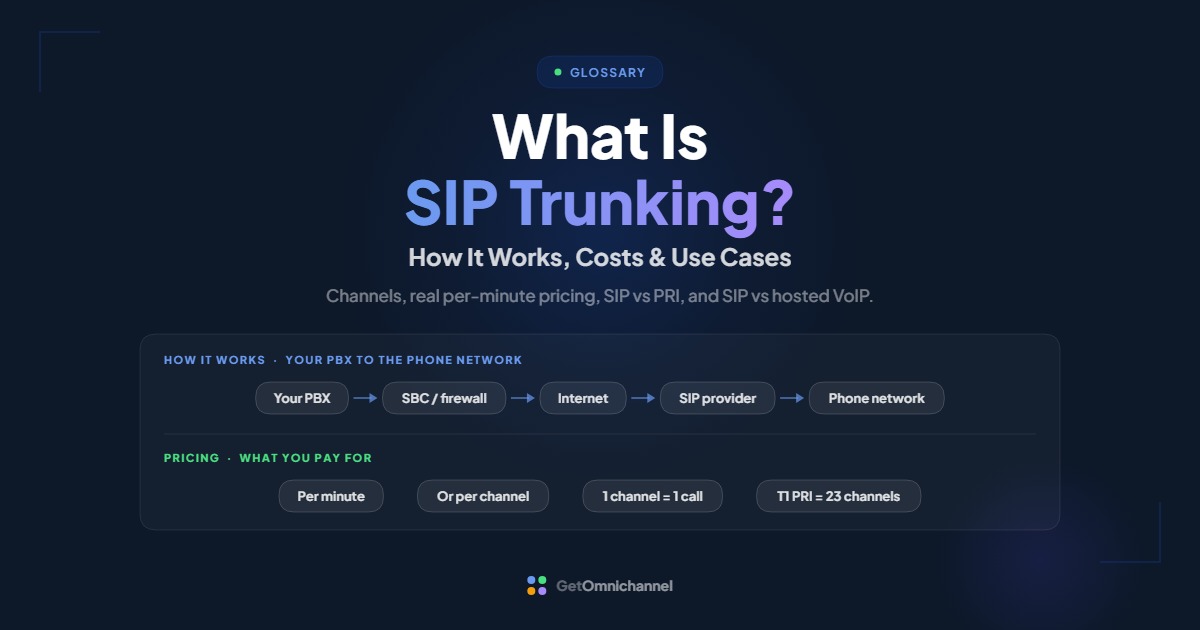
SIP trunking is a service that connects a business phone system (a PBX) to the public phone network over the internet instead of over traditional phone lines. You keep your own PBX and phones; the SIP trunk provider supplies phone numbers and carries your outside calls. You pay per minute or per channel, and each … Read more

VoIP vs Landline: Differences, Costs & Reliability

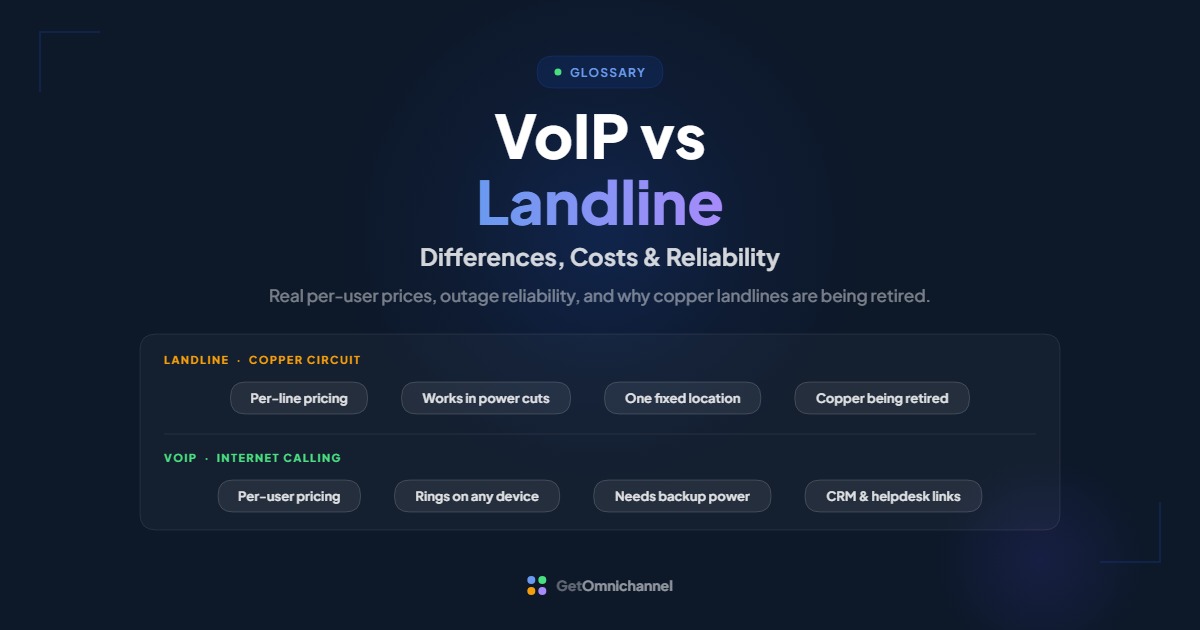
The main difference between VoIP and a landline is how your voice travels. A landline carries calls over a dedicated copper phone circuit, while VoIP sends calls as data over your internet connection. For most businesses, VoIP costs less per line and does more, but it depends on internet and power, so it needs a … Read more

What Is VoIP and How Does It Work?

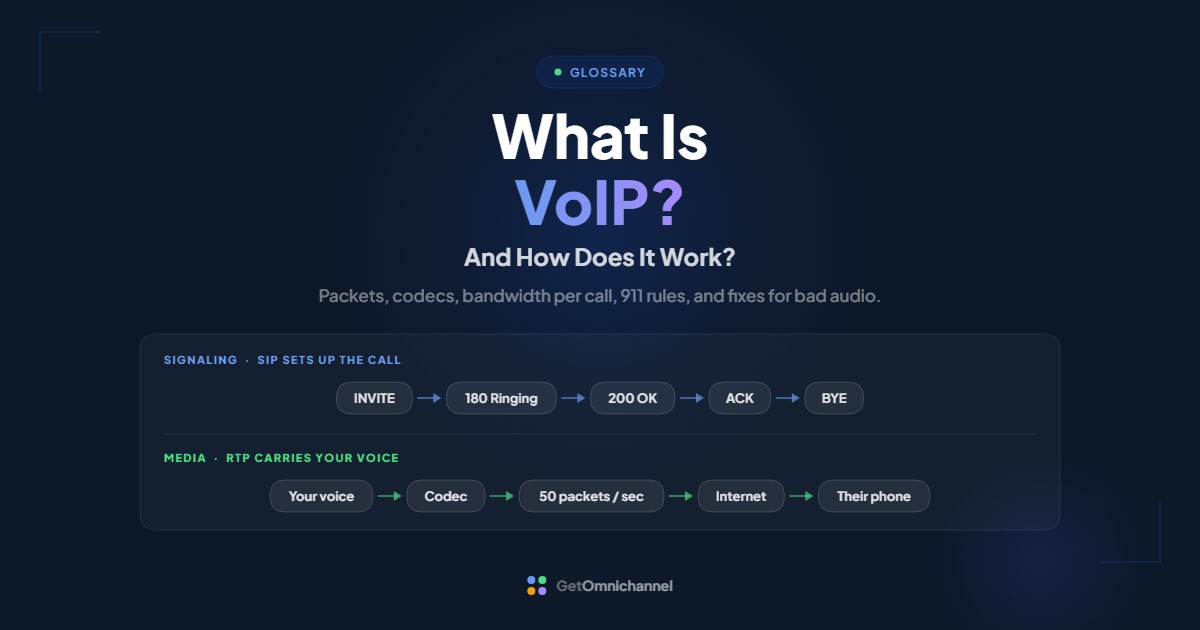
VoIP (Voice over Internet Protocol) is a way of making phone calls over an internet connection instead of a traditional copper phone line. Your voice is converted into digital data, split into small packets, sent across the internet, and reassembled into sound on the other end, usually in well under a second. If you’ve used … Read more